Cadosa Font: Bridging Modern Calligraphy with Digital Design
Every brand tells a story, but the way that story looks often speaks louder than the words themselves. If you have ever found yourself scrolling through hundreds of typefaces looking for that specific "vibe"—something that feels personal yet polished, trendy yet timeless—you have likely encountered the struggle of modern typography. We want our designs to feel handmade, like a signature on a letter, but we need them to function seamlessly on a retina screen or a printed brochure. This is where the gap between raw brush strokes and digital utility often lies. Cadosa Font steps into that space, offering a solution that feels less like a standard file and more like a design partner. It captures the fluidity of a writer’s hand while maintaining the structural integrity required for professional branding assets.
The Visual Personality of Cadosa Script
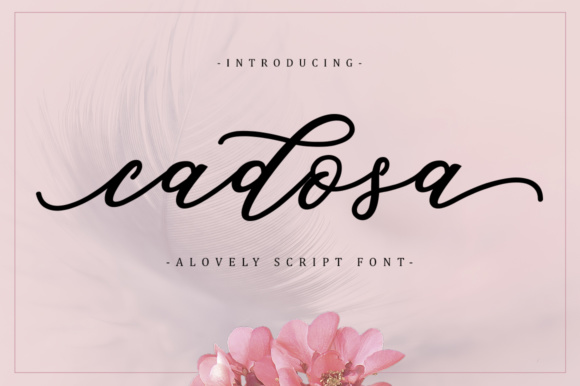
At its core, Cadosa is a modern calligraphy font, but calling it just that feels like an undersell. It possesses a distinct rhythm that mimics the natural flow of ink on textured paper. Unlike rigid, mechanical scripts, Cadosa embraces the imperfections that make handwriting charming. The connections between letters are thoughtfully designed to ensure that the flow doesn't break, which is a common issue with cheaper script fonts. It carries an air of elegance—think of the way a luxury fashion brand signs its name or how a high-end invitation feels in your hand.
Visually, the typeface balances weight and whitespace. The letterforms are full enough to be legible at medium sizes but delicate enough to retain that sophisticated flair at larger scales. It doesn't scream for attention with excessive loops; instead, it draws the eye with a confident, steady grace. This makes it a versatile player in your design assets library. It can be the hero of a wedding invitation, yet it fits just as comfortably as a stylized header on a lifestyle blog. The aesthetic is undeniably "Instagram-ready," fitting perfectly into the curated worlds of fashion influencers and lifestyle brands, but it holds enough weight for traditional print media as well.
Practical Applications for Real-World Projects
Understanding a font’s aesthetic is one thing; knowing how to deploy it is where the real value lies. For designers, entrepreneurs, and content creators, Cadosa offers a wide playground. Let’s break down how this typeface can solve specific visual problems across different mediums.
For logo design, Cadosa shines when you need to communicate approachability and style. A bakery, a boutique clothing line, or a freelance photographer could use this font to create a mark that feels personal. It suggests that there is a human behind the brand, not just a corporation. However, because it is a script font, legibility at small sizes is a key consideration. This is where pairing becomes critical, which we will discuss later.
When it comes to packaging design, the font adds a layer of perceived value. Imagine a candle box or a skincare label using Cadosa for the product name. It instantly elevates the product from "generic" to "artisan." The elegance of the typeface implies quality ingredients and careful craftsmanship. Similarly, in editorial design, such as magazine covers or feature spreads, Cadosa can be used for pull quotes or headlines to add a touch of human emotion to a layout that might otherwise be dominated by rigid sans-serifs.
For the digital realm, web design and social media graphics are primary use cases. On a website, Cadosa works beautifully for hero section headers or "About Me" page titles. It breaks up the monotony of body text and draws the visitor’s eye to key conversion points. On social media, where the scroll speed is fast, a distinct font helps stop the thumb. Whether it’s a quote graphic on Pinterest or a sale announcement on Instagram Stories, Cadosa provides that high-end look that boosts engagement.
Strategic Font Pairing for Maximum Impact
A script font rarely works in isolation, especially in professional design. While Cadosa is beautiful, using it for body text on a website or a long paragraph in a brochure would be a mistake—readers need clear, simple shapes to process information quickly. This is where the art of font pairing comes into play.
To make Cadosa work effectively, you need a strong partner. Sans-serif fonts are typically the best match for modern calligraphy scripts. The clean, geometric lines of a sans-serif provide a visual counterpoint to the organic curves of Cadosa. Think of fonts like Montserrat, Lato, or Roboto. If you use Cadosa for a heading like "Summer Collection," pair it with a clean sans-serif for the subheading and body copy. This creates a hierarchy that guides the reader's eye naturally.
Alternatively, you could pair it with a sturdy serif font for a more traditional, editorial look. A serif with high contrast, like Playfair Display, can complement the elegance of Cadosa without clashing. The key is to ensure the "mood" matches. Cadosa has a romantic, flowing energy; pairing it with a grunge or ultra-modern geometric typeface might create dissonance. Always test your pairings by looking at the contrast in structure but the similarity in tone.
Technical Considerations and Readability
When integrating a premium font like Cadosa into your workflow, you must consider the technical execution. Readability is paramount. A beautiful design fails if the audience cannot read the message. Because Cadosa is a connected script, specific letter combinations (ligatures) are often included to make the connections smoother. Check if the font file includes alternate characters or swashes. These extras allow you to customize the look of specific letters, preventing repetition if a word has two identical letters next to each other, or adding a flourish to the beginning or end of a word.
Spacing is another factor. Script fonts often require manual kerning (adjusting the space between letters) to look perfect. Don't rely solely on the default tracking. Zoom in on your headlines and adjust the spacing between specific letter pairs to ensure the visual rhythm is consistent. This attention to detail separates amateur designs from professional branding.
Furthermore, consider the medium. A font that looks stunning on a high-resolution screen might lose detail in embroidery or engraving. If you plan to use Cadosa for merchandise, such as hats or mugs, ensure the file format supports vector scaling without losing the crispness of the strokes.
Commercial Usage and Licensing
For small business owners and freelancers, the legal side of design assets is often the most confusing. Fonts are software, and their use is governed by licenses. If you are using Cadosa for a client's logo, a commercial product, or a marketing campaign, you need to ensure you have the correct commercial license.
Most premium fonts come with a license that covers personal and commercial use, but the details vary. Does the license cover one computer or multiple users in an office? Can you embed the font in an app or an e-book? Does it allow for print-on-demand (POD) services? These are questions you must answer before finalizing a design. Using a font without the proper license can lead to legal headaches down the road, especially if the brand grows and the logo becomes a valuable asset. Always read the End User License Agreement (EULA) provided with the font file.
Elevating Your Visual Identity
Ultimately, typography is the voice of your visual identity. Choosing a typeface like Cadosa is a decision to speak with elegance, warmth, and modern sophistication. It bridges the gap between the digital and the analog, offering a tool that feels personal yet professional. Whether you are designing a wedding suite for a client, crafting a social media strategy for a fashion brand, or building a website for a new startup, having a versatile script font in your toolkit is invaluable. It allows you to inject personality into your layouts and connect with your audience on a more emotional level. By pairing it wisely and using it intentionally, Cadosa becomes more than just a font—it becomes a cornerstone of your creative expression.