Goodline Font: Graceful Movement in Every Stroke
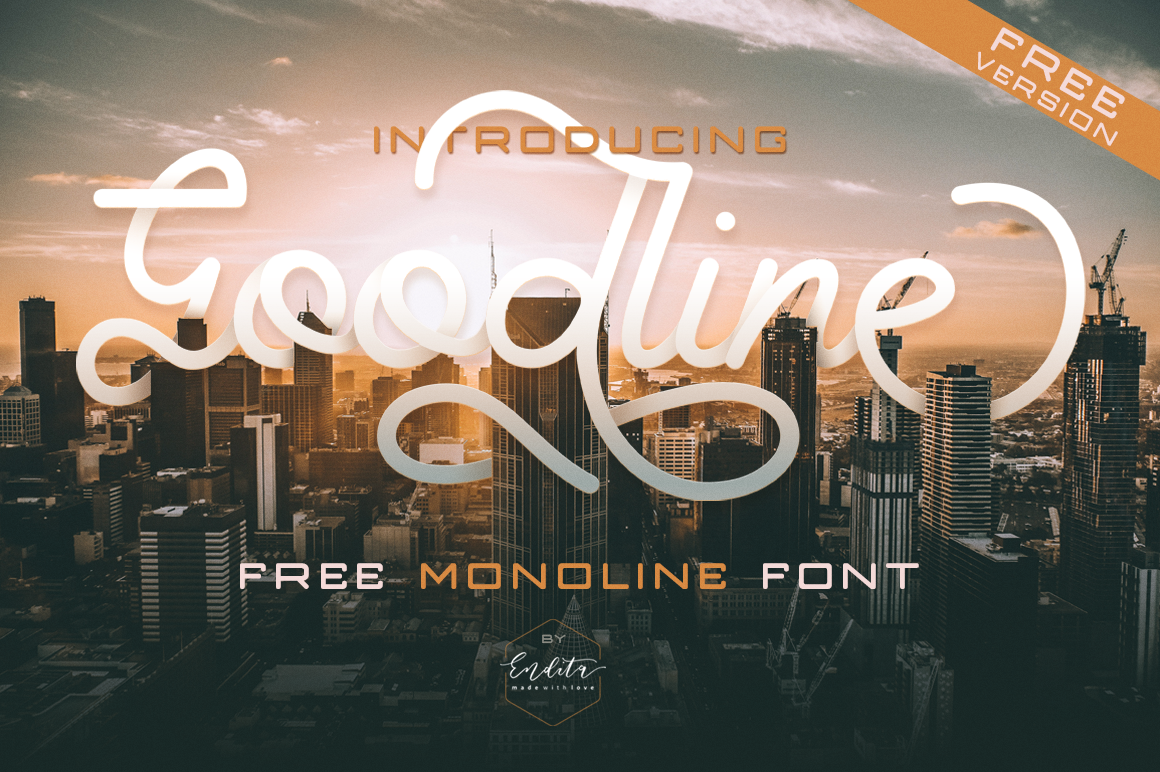
There's a particular kind of elegance that comes from simplicity—when a single, fluid line can convey both energy and sophistication without trying too hard. That's exactly the feeling Goodline Font delivers. This monoline typeface carries a natural sense of movement, with letterforms that feel hand-drawn yet polished, organic yet intentional. If you've been searching for a display font that makes headlines feel alive while staying clean and readable, Goodline might be the creative asset you didn't know your toolkit was missing.
What Makes Goodline Stand Out
Goodline is a monoline font, which means its strokes maintain a consistent thickness throughout each character. That uniformity gives it a modern, streamlined appearance—no dramatic thick-thin contrasts, no heavy serifs, no unnecessary ornamentation. But here's where it gets interesting: despite that consistency, the letterforms themselves have a flowing, almost calligraphic quality. The curves feel intentional. The connections between letters suggest rhythm. It's the kind of typeface that looks effortless on screen and in print, which is harder to achieve than most people realize.
For designers and creators who work across multiple platforms, that balance matters. You need a font that performs well as a large headline on a website banner but also holds its own on a small product label. Goodline manages both scenarios gracefully. Its clean geometry ensures legibility at various sizes, while its subtle movement prevents it from feeling sterile or overly corporate.
Where Goodline Truly Shines
Let's talk about real-world applications, because a font is only as valuable as the projects you can use it for. Goodline works beautifully as a display typeface, which means it's built for headlines, titles, and any text that needs to command attention. Think about the last time you scrolled through Instagram and stopped because a piece of graphic design caught your eye. Chances are, the typography played a significant role in that pause. A font like Goodline—with its clean lines and subtle personality—can be the difference between content that blends in and content that sticks.
Branding and logo design are natural fits. If you're building a brand identity for a lifestyle company, a boutique studio, a wellness brand, or a creative agency, Goodline's aesthetic communicates modernity without coldness. It says "we care about design" without shouting it. Pair it with a simple sans serif for body text, and you've got a typographic system that feels cohesive and intentional.
Packaging design is another area where this font excels. Imagine it on a candle label, a skincare bottle, or a artisan food package. The monoline quality gives it a handcrafted feel, while its clean execution keeps everything looking professional. It's especially effective for products that want to convey a sense of authenticity and care—brands that feel personal rather than mass-produced.
For social media graphics, Goodline offers versatility that many script or handwritten fonts lack. It's readable at smaller sizes, which matters when someone's viewing your content on a phone screen. Use it for quote graphics, announcement posts, story headers, or carousel titles. It adds visual interest without sacrificing clarity, which is a common pitfall with more decorative typefaces.
Practical Tips for Using Goodline Effectively
Choosing the right font is only half the equation. How you use it determines whether your design feels cohesive or chaotic. Here are some practical considerations when working with Goodline in your projects.
Font pairing is everything. Goodline's personality is distinctive enough that it doesn't need another expressive font competing for attention. Pair it with a neutral sans serif like a clean geometric or grotesque typeface for body copy. If your project leans editorial, a classic serif can create an interesting contrast. The key is letting Goodline do the heavy lifting on headlines while supporting text stays understated.
Consider your project's goals before committing. Goodline's aesthetic leans modern and slightly feminine, though it's versatile enough to work across many contexts. It's a strong choice for fashion, beauty, lifestyle, food, wellness, and creative industries. For more corporate or technical applications, you might want to test it against your brand guidelines to ensure alignment. That said, don't be afraid to experiment—sometimes unexpected font choices create the most memorable designs.
Test at multiple sizes. Even though Goodline is designed as a display font, it's worth checking how it performs at the specific sizes you'll use. A headline at 48 pixels on a website looks very different from the same text at 24 pixels on a printed flyer. Make sure the letterforms stay clear and the monoline strokes remain distinct at your intended output size.
Pay attention to spacing. Monoline fonts sometimes benefit from slightly increased letter-spacing, especially in all-caps settings. Give the characters room to breathe. A little extra tracking can transform good typography into great typography, and it's one of those small adjustments that separates amateur design from professional execution.
Building Consistency Across Your Brand
One of the most overlooked aspects of brand identity is typographic consistency. When your website uses one set of fonts, your social media uses another, and your printed materials use something else entirely, your brand starts to feel fragmented. Audiences might not consciously notice inconsistent typography, but they'll sense that something feels off—and that subtle disconnect erodes trust over time.
Goodline can serve as an anchor for your brand's display typography. By using it consistently across headlines, pull quotes, and featured text across all platforms, you create a visual thread that ties everything together. Your Instagram graphics start to feel like they belong to the same family as your website headers. Your packaging echoes the same energy as your email newsletters. That kind of consistency builds recognition, and recognition builds trust.
If you're a small business owner or solopreneur managing your own design work, having a reliable display font in your toolkit simplifies decision-making. Instead of hunting for a new typeface every time you start a project, you already have one that you know works. That efficiency is valuable when you're wearing multiple hats and need to produce professional-looking materials quickly.
Licensing and Getting Started
Before using any font in a commercial project, it's always smart to review the licensing terms. Goodline is available as a freebie, which makes it accessible for creators at every level—from hobbyists working on personal projects to professionals building client deliverables. That said, always verify the specific license to confirm what's permitted. Can you use it in logo designs that will be trademarked? Can you embed it in digital products for sale? These details matter, and checking upfront prevents headaches later.
Once you've confirmed the licensing works for your needs, download the font files and install them on your system. Take some time to explore the included characters and styles. Monoline fonts sometimes include alternates or ligatures that add extra flair to your designs, and knowing what's available helps you make the most of the typeface.
Start with a small project—a social media post, a blog header, or a simple print layout—to get a feel for how Goodline behaves in practice. Experiment with different sizes, colors, and backgrounds. Try pairing it with various body fonts. The more you work with it, the more you'll understand its strengths and the contexts where it truly shines.
Typography shapes how people perceive your work before they read a single word. A font like Goodline—clean, modern, full of quiet movement—gives your headlines a voice that feels both contemporary and approachable. Whether you're designing a brand identity from scratch or refreshing an existing one, it's the kind of creative resource that earns its place in your permanent collection.