Moria Story Font: The Handwritten Look That Feels Real
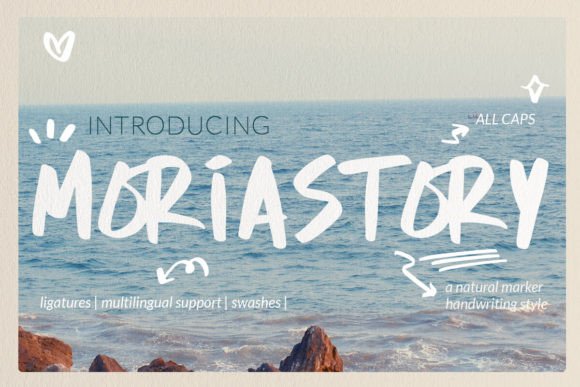
There's a difference between a font that pretends to be handwritten and one that actually captures the energy of a hand moving quickly across paper. Most script typefaces fall into the first category — they look pretty, but something feels off. The letters are too uniform, the connections too smooth, the overall effect too polished. Moriastory takes a different approach. This is a natural marker handwriting style font built around the idea that authentic imperfection is more compelling than manufactured neatness.
What sets this typeface apart immediately is its dual uppercase system. You get two distinct variations of every capital letter, which means your headlines, logos, and display text never look repetitive. When every "A" and "B" and "C" can shift between two forms, the text starts to read like something a real person actually wrote — because real handwriting never produces identical letters twice. Add in the custom ligatures that connect certain letter combinations in natural, flowing ways, and you have a typeface that genuinely mimics the rhythm of swift, confident penmanship.
Why Authenticity in Typography Matters More Than Ever
We live in a visual landscape saturated with templated design. Canva graphics, Instagram stories, product labels, website headers — so much of it uses the same handful of popular fonts. The result is a kind of visual sameness that makes it harder for any single brand or project to stand out. When everything looks clean and corporate, the things that feel human start to pull focus.
This is where a handwritten typeface like Moriastory earns its place in a designer's toolkit. It doesn't just look handwritten in a vague, decorative sense. The marker-style strokes have weight and variation. The letter spacing breathes. The two uppercase sets create a subtle visual texture that keeps longer headings from looking mechanical. For anyone working on a project where personality and warmth matter — a boutique bakery's branding, a wellness coach's social media presence, an indie author's book cover — this kind of typographic authenticity translates directly into audience connection.
Real Applications Across Design and Business
Let's get specific about where Moriastory works and why. In logo design, the dual uppercase system is particularly useful. You can alternate letter forms to find the combination that best fits the shape and balance of your mark. A coffee shop logo using the font might pair one variation of "C" with a different "O" to create visual interest without sacrificing legibility. The result feels custom, not clip-art.
For packaging design, especially in artisanal or small-batch markets, a handwritten font signals craft and care. Think about the labels on small-batch candles, handmade soaps, specialty foods, or craft beverages. Consumers in these categories respond to visual cues that suggest a human touch. Moriastory delivers that without looking sloppy or hard to read — a critical balance that many script fonts fail to strike.
Social media graphics benefit enormously from typefaces that break the scroll. When your audience is moving through dozens of polished, digitally perfect posts, a heading that looks like someone grabbed a marker and wrote with intention can stop the thumb. This font works well for quote graphics, announcement posts, sale promotions, and story overlays where you want the text to feel conversational rather than corporate.
On websites and blogs, Moriastory serves best as a display or accent font rather than a body text choice. Pair it with a clean sans serif for paragraphs and let the handwritten style handle headlines, pull quotes, call-to-action buttons, and section dividers. This approach gives your site visual personality without sacrificing the readability that keeps visitors on the page.
Matching Font Personality to Project Goals
Not every project needs a handwritten font, and choosing the right typeface starts with being honest about what you're trying to communicate. Moriastory's personality leans warm, approachable, creative, and personal. If your brand identity centers on authority, precision, or luxury minimalism, a marker-style script might send the wrong signal. But if your project calls for friendliness, authenticity, artistic flair, or a handmade sensibility, this typeface aligns naturally with those values.
Consider the emotional register of your content. A wedding invitation suite benefits from the personal, intimate feel of handwriting. A children's book cover can use the playful energy of marker strokes. A fitness coach's motivational graphics gain urgency and human energy from a handwritten look. An indie musician's album artwork or merch design can lean into the raw, expressive quality of the font. In each case, the typography reinforces the message rather than working against it.
Think about your audience's expectations too. If you're targeting creative professionals, design-savvy consumers, or communities that value individuality, a distinctive handwritten font signals that you understand their aesthetic preferences. If your audience expects polished corporate communication, you might reserve Moriastory for specific campaign elements rather than your primary brand typeface.
Practical Tips for Working With This Typeface
Font pairing is where many designers either elevate a project or let it down. Moriastory pairs well with simple, geometric sans serif fonts — think clean, modern typefaces with minimal personality of their own. The contrast between the organic handwritten style and a structured sans serif creates visual hierarchy without competing for attention. Avoid pairing it with ornate serifs or other decorative scripts, which can create visual noise.
Test your pairings at multiple sizes before committing. A handwritten font that looks charming at 48 pixels might become illegible at 14. Check how the ligatures and alternate uppercase letters render across different devices and browsers if you're using the font for web design. Print a sample if you're working on physical materials — what looks great on screen sometimes loses character in print, or gains it.
Pay attention to color and contrast. Handwritten fonts with marker-style weight often perform best on clean backgrounds with strong contrast. Light text on dark backgrounds can work beautifully, but test carefully since the stroke variation in handwriting fonts can create uneven legibility in certain color combinations.
Before purchasing any premium font, review the full character set and included styles. Check whether the licensing covers your intended use — personal projects, commercial work, client deliverables, merchandise, digital products. A font used on a product you sell requires commercial licensing, and understanding the terms upfront prevents headaches later. Most quality font foundries make licensing information clear, but it's worth confirming before you build a brand identity around a typeface you might not have rights to use commercially.
Building Visual Consistency With a Distinctive Font
One of the underappreciated advantages of choosing a strong, characterful typeface early in a project is the consistency it creates across all your visual touchpoints. When you use Moriastory across your website headers, social media templates, email graphics, printed materials, and packaging, you build a recognizable visual thread that ties your brand together. People start associating that specific handwritten style with your business or creative work.
This kind of typographic consistency is a cornerstone of effective brand identity. It doesn't require a massive budget or a professional design agency. It requires making a deliberate font choice and sticking with it. The dual uppercase variations in Moriastory actually help with this — they give you enough range to keep things visually interesting across different applications without breaking the cohesive look that comes from using one well-chosen typeface.
Whether you're designing a pitch deck, mocking up product labels, creating a course workbook, or building a social media content calendar, having a reliable handwritten font in your design assets saves time and strengthens the visual story you're telling. Moriastory fills that role with the kind of natural, marker-drawn character that feels genuinely human — which, in a world of algorithmic content and templated design, might be exactly what your project needs.