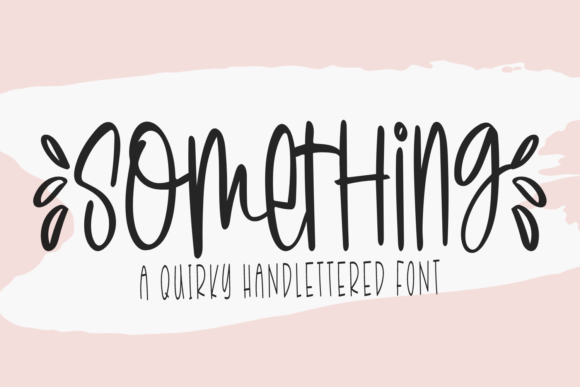
Something: The Handwritten Font for Authentic Connection
There's a particular warmth to a handwritten note that digital text just can't replicate. It feels personal, immediate, and human. This is the exact feeling captured by Something, a cute, casual, and relaxed handwritten font designed to inject a dose of authenticity into your work. In a landscape crowded with sterile, perfect vectors, choosing a typeface with genuine character can be the detail that makes your brand or project feel truly approachable. It’s not about being flashy; it’s about being real.
A Typeface with a Friendly, Approachable Vibe
At its core, Something is a script font that mimics the natural, slightly uneven flow of handwriting. It avoids the overly formal or cursive styles that can sometimes hinder legibility, instead opting for a clear, friendly aesthetic. The letterforms have a gentle bounce and a consistent weight that feels casual without being sloppy. This balance is crucial—it allows the font to convey warmth and personality while still maintaining a professional polish suitable for commercial applications. Think of it as the typographic equivalent of a friendly smile in a business email; it sets a welcoming tone from the first glance.
The visual appeal lies in its simplicity and versatility. It works beautifully at larger display sizes for headlines, where its character can shine, but it also holds up surprisingly well in shorter blocks of body text, like captions or callouts. When you're looking for a creative font to bridge the gap between professional and personal, this kind of handwritten font is an invaluable asset in your design toolkit.
Where to Use This Handwritten Font
The true test of any typeface is its real-world application. Something excels in projects where building a genuine connection with the audience is key. Here are some practical ways to incorporate it into your creative workflow:
- Branding & Logo Design: For small businesses, cafes, boutiques, or personal brands like coaches and consultants, this font can form the heart of a logo. It instantly communicates approachability and care, helping to build brand recognition through a distinct, human touch. Pair it with a clean sans serif font for a balanced and professional brand identity.
- Packaging & Merchandise: Imagine this font on a artisan coffee bag, a candle label, or a handwritten-style thank you card tucked into an order. It elevates packaging from merely functional to an experience, making customers feel valued. It's equally effective on merchandise like tote bags, mugs, and t-shirts, where a casual, cool aesthetic is desired.
- Social Media Graphics & Digital Content: In the fast-scroll world of Instagram, Facebook, and Pinterest, a font with personality stops the thumbs. Use Something for quote graphics, sale announcements, story highlights, or video thumbnails. Its casual style is perfect for creating relatable, shareable content that boosts audience engagement.
- Invitations & Stationery: This is a natural home for a handwritten font. From wedding invitations and baby shower cards to business event invites and personalized stationery, it sets a relaxed, celebratory mood. It works great for letters, cards, and notes, adding a personal touch that printed fonts can lack.
- Websites, Blogs & Editorial Layouts: Use it strategically for blog post titles, pull quotes, or sidebar headings to break the monotony of standard web typography. In editorial design, it can add a conversational flair to magazine layouts or digital lookbooks, guiding the reader's eye with a friendly nudge.
Practical Tips for Pairing and Implementation
Introducing a distinct font like this into your projects requires a thoughtful approach to maintain readability and professional presentation. Here’s some practical advice for getting the most out of your design assets:
Master the Font Pairing: A handwritten font is a star player, not the entire team. It needs supporting roles to create visual harmony. A classic and effective strategy is to pair Something with a simple, geometric sans serif font. The contrast between the organic, flowing script and the clean, structured sans serif creates a dynamic and readable layout. For example, use Something for the main headline and the sans serif for subheadings and body copy. This pairing ensures your message is both engaging and easy to digest.
Prioritize Readability: Always test your chosen font in context. While Something is designed for clarity, handwritten styles can become difficult to read if used for long paragraphs or at very small sizes. Reserve it for headlines, short sentences, and key phrases where its personality can be appreciated without sacrificing function. Check the legibility on both mobile and desktop screens, and in print proofs when possible.
Review the Included Styles: Many premium fonts come with multiple versions or stylistic alternates. Explore what's included with Something. Are there different letter variations? Does it include a set of swashes or decorative elements? Understanding the full range of your typeface allows you to customize your designs further and maintain consistency across all your materials.
Understand Commercial Licensing: Before using any font in a commercial project—whether for client work, products for sale, or marketing materials—ensure you have the correct license. Most reputable font foundries offer clear licensing terms. Using a font like Something confidently means knowing you're legally covered to add it to your fresh creations, from digital products to printed merchandise.
Building a Cohesive Visual Language
Ultimately, the fonts you choose are a fundamental part of your visual communication strategy. They help shape perception, guide the viewer's eye, and contribute to the overall mood of your project. A font like Something