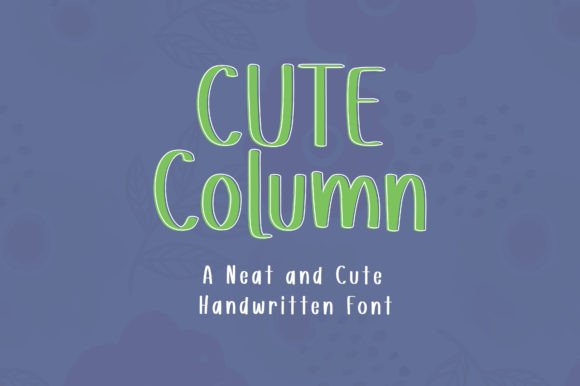
Why Cute Column Font is Your New Secret Weapon for Charming Design
There’s a moment in every creative project where you hit a wall. You’ve got the perfect image, a compelling message, and a clear vision, but something feels… sterile. The typography you’re using is technically correct, maybe even elegant, but it lacks the spark of personality that makes people stop scrolling and actually connect. This is the exact problem the Cute Column Font was designed to solve. It’s not just another typeface in a sea of options; it’s a carefully crafted tool that bridges the gap between the clean professionalism of a sans serif font and the irresistible warmth of handwritten font. It’s for the designer who needs to inject approachability into a brand, the small business owner creating packaging that feels personal, or the content creator whose digital notes need to feel inviting, not intimidating.
Beyond Cute: The Practical Anatomy of a Friendly Typeface
Let’s be clear: “cute” in this context doesn’t mean childish or overly whimsical. The genius of the Cute Column Font lies in its balance. It starts with the structural clarity of a modern typography base, ensuring letters are distinct and legible at various sizes. Then, it layers on the subtle, organic irregularities of a script font. You’ll notice gentle variations in line weight, soft curves that mimic a relaxed hand, and a rhythm that feels human and spontaneous. This makes it a standout premium font choice because it offers something rare: personality without sacrificing function. It’s the kind of creative font that works beautifully in a logo design for a boutique bakery, on the label of a handmade soap, or as the headline for a lifestyle blog, instantly communicating warmth and authenticity.
One of the most critical aspects of any commercial font is its versatility. The Cute Column Font family typically includes multiple styles—think regular, bold, italic, and sometimes even a more pronounced script variant. This isn’t just a nice-to-have; it’s essential for building a cohesive brand identity. You can use the regular weight for body text on a website or in a digital product like a PDF guide, ensuring readability, while employing the bold style for impactful headers in social media graphics or on print materials like flyers. The italic can add emphasis in editorial layouts or packaging design without breaking the visual flow. This built-in hierarchy saves you from the headache of finding a complementary typeface and allows you to create a complete visual language with a single, harmonious family.
From Screen to Shelf: Where This Font Truly Shines
Imagine you’re launching a new line of artisanal teas. Your packaging needs to stand out on a crowded shelf, convey a sense of handcrafted quality, and be easy to read. Using the Cute Column Font for the tea names and descriptions accomplishes all three. Its display font qualities make it eye-catching, while its legibility ensures customers can quickly find the flavor they want. The handwritten touch suggests the product is made with care, aligning perfectly with your brand story. This same principle applies across countless applications:
- Branding & Logo Design: Perfect for businesses in wellness, beauty, food, coaching, or any field where trust and approachability are key. It creates a memorable logo design that feels personal.
- Digital Products & Marketing: Elevates marketing assets like email headers, webinar slides, and lead magnets. It makes digital planning templates and study notes feel less like chores and more like a creative endeavor, boosting audience engagement.
- Web & Social Media: As a web font, it can make blog posts and website headers feel more conversational. On social media, it stops the scroll in Instagram Stories, Pinterest pins, and Facebook ads, helping to build brand recognition through consistent, charming visuals.
- Print & Invitations: Brings life to posters, wedding invitations, thank you cards, and merchandise like tote bags or mugs. It adds a layer of thoughtfulness and custom design to any print materials.
Making It Work: Smart Pairing and Professional Use
A powerful font is only as good as its implementation. To get the most out of the Cute Column Font, think of it as your project’s charismatic lead. It commands attention and sets the emotional tone, so it pairs best with a supporting actor that knows when to step back. A clean, geometric sans serif font is a classic partner. Use the Cute Column Font for headlines, pull quotes, and key phrases where you want to inject personality. Then, use a simple sans serif for longer blocks of body text. This contrast ensures maximum readability while maintaining a dynamic and professional visual consistency.
Before you commit to any design assets, including a premium font, always test it in context. Create a mockup of your project—a fake social media post, a sample website banner, a draft of your packaging layout. Does the font hold its charm at small sizes? Does it feel overwhelming in large doses? Is the spacing between letters comfortable for reading? Furthermore, never overlook the licensing. If you’re using the Cute Column Font for a client project, merchandise you’ll sell, or a widely distributed digital product, ensure your license covers commercial use. Reputable font foundries make this clear, and respecting this aspect is what separates professional practice from an amateur oversight. By choosing a font that is both visually appealing and legally sound, you’re not just decorating; you’re building a sustainable and recognizable brand asset.