Sandbox Steel: When Your Brand Needs a Robotic Edge
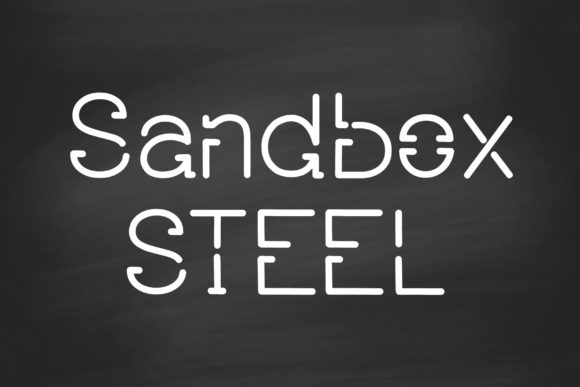
You know that moment when a design feels almost too perfect, too polished, and lacking a specific personality? That’s usually the sign of a generic sans-serif doing the heavy lifting. If you are building a brand that deals with tech, innovation, fitness, or even modern streetwear, you often need something that feels a bit more engineered. Enter Sandbox Steel. It is a clean, robotic-styled display font that brings a unique mechanical precision to your work without sacrificing readability. It sits in that sweet spot between futuristic flair and practical utility, making it an ideal candidate for anyone looking to inject a cool, industrial touch into their visual assets.
The Industrial Aesthetic in Modern Branding
When we talk about typography in branding, we are really talking about personality. A serif font might whisper tradition and reliability, while a script font shouts elegance and flow. Sandbox Steel, on the other hand, speaks in a language of efficiency, modernity, and structure. It doesn’t just sit on the page; it occupies space with a distinct architectural confidence. This is why it has become a go-to choice for designers working on web designs, business cards, or packaging where a "cool touch" is a requirement, not just a bonus.
For small business owners, especially those in the startup ecosystem or the creator economy, the font you choose for your logo is the handshake you offer the world. If your business involves coding, engineering, gaming, or even high-performance fitness, a whimsical handwritten font isn't going to cut it. You need a typeface that implies durability and forward-thinking design. Sandbox Steel offers that robotic precision. It suggests that your processes are streamlined and your product is built to last. It’s about visual consistency; when your headers, sub-headers, and logo share this distinct geometric DNA, your brand recognition skyrockets.
Real-World Applications: From Packaging to Pixels
The versatility of a display font is often tested when you move it off the computer screen and into the physical world. One of the strongest use cases for Sandbox Steel is packaging design. Imagine a matte black box with neon green foil stamping using this typeface—it immediately signals a premium, high-tech product. It works exceptionally well for consumer electronics, supplements, or artisanal coffee brands that want to emphasize the "craft" aspect of their production.
However, its utility doesn't stop at physical goods. In the realm of digital products and web design, Sandbox Steel acts as a powerful anchor. Because it is a display font, it shines brightest at larger sizes. This makes it perfect for the hero section of a website, the title cards of a YouTube video, or the headers of an email marketing campaign. It grabs attention immediately, which is crucial for audience engagement in a crowded digital feed.
Consider the specific needs of different creatives using this font:
- Social Media Managers: You can use Sandbox Steel for bold announcements, sale graphics, or quote cards that need to stand out against busy backgrounds. Its clean lines ensure that the text remains legible even when overlaid on images.
- Editorial Designers: If you are laying out a magazine spread or a blog post about future trends, using this font for pull quotes or section headers breaks up the monotony of standard body text.
- Merchandise Creators: For T-shirts, tote bags, or stickers, a robotic display font adds that "merch" feel. It looks intentional and designed, rather than like a default setting.
- Event Planners: Even for something like a corporate gala or a tech conference invitation, this typeface sets the mood immediately, signaling that the event will be sleek and professional.
Mastering Typography: Pairing and Readability
While Sandbox Steel is a fantastic creative font, it is essential to understand how to use it effectively to improve professional presentation. Because it has a strong personality, it can be overwhelming if used for long paragraphs of body copy. Think of it as the headline act, not the backup singer. The goal is to use it where impact is needed most—titles, logos, and short bursts of text—and pair it with something more subdued for the details.
A common strategy in modern typography is to pair a geometric or industrial display font with a clean sans-serif or a humanist serif. For example, if you use Sandbox Steel for your H1 and H2 headers on a website, consider pairing it with a highly legible sans-serif like Roboto, Open Sans, or Lato for the body text. This contrast creates a visual hierarchy that guides the reader's eye. The headers provide the "cool" factor and brand identity, while the body font ensures the actual content is easy to digest.
Readability is paramount. Even the most premium font fails if the audience has to squint to read it. Because Sandbox Steel has that "robotic" styling, you need to pay attention to kerning (the space between letters) and leading (the space between lines). Usually, display fonts breathe better with a little extra letter-spacing, especially when used in all-caps. Always test your typography choices on different devices. A font that looks incredible on a 27-inch monitor might look clunky on a mobile screen if the letterforms are too complex. Fortunately, the "clean" aspect of Sandbox Steel helps mitigate this, as it avoids overly fussy serifs or swashes that tend to blur at small sizes.
Strategic Design Assets for the Future
When you invest in a design asset like a specialized typeface, you are essentially investing in the toolkit that builds your brand's future. One of the practical advantages of a font like Sandbox Steel is its ability to evolve with your projects. It works just as well for a seasonal marketing campaign as it does for your permanent brand identity.
For the DIY entrepreneur or the small business owner managing their own marketing, having a font that looks "expensive" is a huge advantage. It bridges the gap between amateur design and agency-level production. It helps you create marketing assets that look cohesive. Your Instagram stories, your website headers, your business cards, and your invoices can all share a singular, robotic aesthetic that tells a consistent story about who you are.
Furthermore, when choosing a commercial font, licensing is a critical detail you cannot ignore. Always ensure that the license covers your intended use. If you are selling merchandise (like T-shirts or mugs), you typically need an extended license compared to just using it on a website. Ensuring your licensing is in order protects your business legally and supports the type designers who create these tools for us.
Ultimately, choosing a typeface is about finding a voice. If your brand voice is clear, strong, and forward-thinking, Sandbox Steel offers the visual vocabulary to match. It provides that necessary edge to distinguish your work from the sea of default fonts, helping you connect with an audience that appreciates precision and style.